Next Gaelic Class in Baltimore – 11 February
 The Gaelic class for Baltimore got off to a great start in January. The next session is 11 February and we’d love to have you join us.
We are still interested in starting a Gaelic class in the SilverSpring-DC area, and there are a couple people there who want to take classes. But we need at least two more to establish a class.
If you are of Scottish, Irish, or Manx descent, Gaelic is in your blood. Contact us!
WEDNESDAY, 11 February 2015
7:00 pm – 8:30 pm
Liam Flynn’s Alehouse
22. W. North Avenue Baltimore, Maryland $10 per class The text we will be using is Teach Yourself Complete Gaelic by Boyd Robertson and Iain Taylor If you do not have the text yet and want to attend, don’t worry about the book, just come!
A course exploring the links between the Scottish Gaelic language and environment
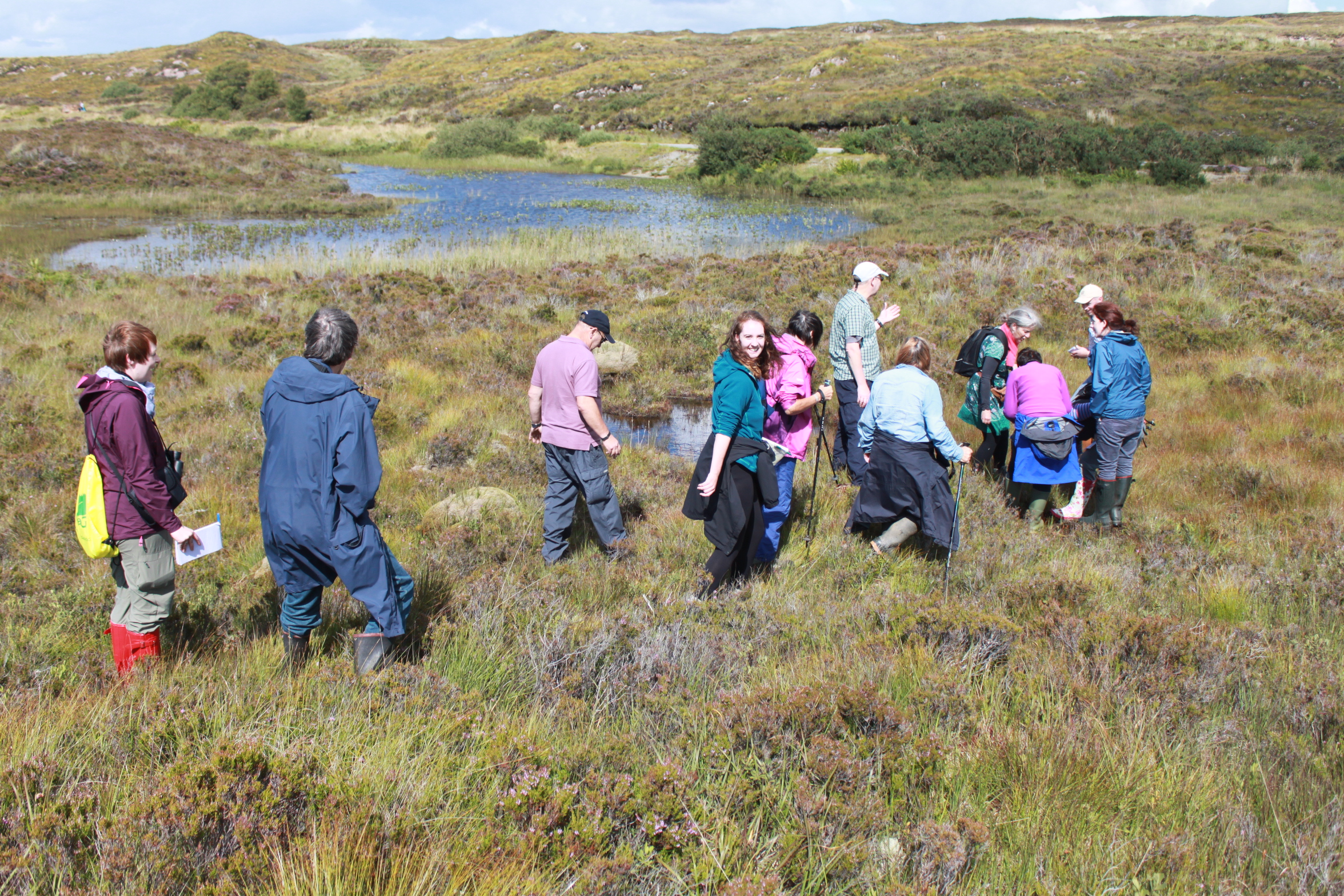
We just ran across a fascinating advanced course in Scotland for Gaelic speakers that explores the links between the Scottish Gaelic language and environment. Àrainneachd, Cànan Is Dualchas, (which means “environment, language and heritage”) teaches students to recognize plants and animals by their Gaelic names, and in their natural habitats. In other words, it’s not such classroom learning. Daily excursions take students into a variety of habitats. Plus, students learn about ecology, and about traditional uses and folklore associated with native species.
You might be thinking, “Great course – but I’m not in Scotland and I’m a beginning learner.” The site contains several vocabulary lists focused on the landscape, animals, and plants, which are very useful to all learners. To check it out Click Here.
Update on Re-start of Gaelic Classes
Fàilte Càirdean!
The Gaelic class for Baltimore is growing and we are excited to re-start classes on 28 January. See the details below.
We are still interested in starting a Gaelic class in the SilverSpring-DC area, and there are a couple people there who want to take classes. But we need at least two more to establish a class.
If you are of Scottish, Irish, or Manx descent, Gaelic is in your blood. Contact us!
WEDNESDAY, 28 January 2015
7:00 pm – 8:30 pm
Liam Flynn’s Alehouse
22. W. North Avenue Baltimore, Maryland $10 per class
The text we will be using is Teach Yourself Complete Gaelic by Boyd Robertson and Iain Taylor If you do not have the text yet and want to attend, don’t worry about the book, just come!
Join us for Burns Night at Liam Flynn’s Alehouse in Baltimore – 25 January
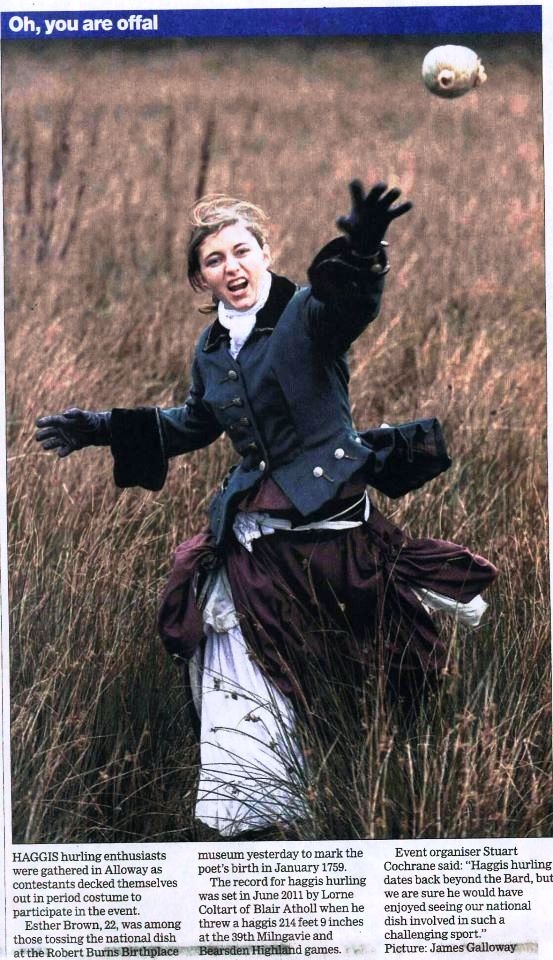 There won’t be an haggis hurling, but at this year’s celebratory tribute to the life, works and spirit of the great “Scottish Ploughmen Poet”, Robert Burns (1759-1796) at Liam Flynn’s Ale House, 22 West North Avenue in Baltimore there will great live music, poetry readings, whiskey tasting, and a great dinner of Scotch Broth soup, haggis, neeps & taddies, kale salad, and dessert.
Seating starts at 5pm. Admission is $30, inclusive of the full dinner and entertainment.
It’s a grand time every year.
RSVP by calling Liam at (443)956-1702, or by clicking on the Burns Night image below.

Gaelic Classes Starting Again in Baltimore – 28 January 2015

Fàilte Càirdean!
There is snow on the ground and a new year is freshly begun. It’s a great time to do something new, so we are yawning and stretching and waking up again. In other words, Gaelic classes are resuming in Baltimore. If you are of Scottish, Irish, or Manx descent, Gaelic is in your blood.
on WEDNESDAY, 28 January 2015
7:00 pm – 8:30 pm
Liam Flynn’s Alehouse
22. W. North Avenue Baltimore, Maryland $10 per class
Next Gaelic Class – 10 April
Fàilte Càirdean!
Spring is finally really here – flowers are out in abundance, and we’re having chilly, breezy days. It’s a great time to do something new, and we are recruiting new students to the class. If you are of Scottish, Irish, or Manx descent, Gaelic is in your blood.
JOIN US AT THE NEXT GAELIC CLASS
on THURSDAY, 10 APRIL
7:00 pm – 8:30 pm
Liam Flynn’s Alehouse
22. W. North Avenue Baltimore, Maryland $15 per class
Next Gaelic Class – 20 March
Fàilte Càirdean!
Spring is almost upon us. It’s a great time to do something new, and we are recruiting new students to the class. If you are of Scottish, Irish, or Manx descent, Gaelic is in your blood.
on THURSDAY, 20 MARCH
7:00 pm – 8:30 pm
Liam Flynn’s Alehouse
22. W. North Avenue Baltimore, Maryland $15 per class
Next Gaelic Class – THIS THURSDAY – 6 March
Mo Càirdean,
THE NEXT GAELIC CLASS
is THURSDAY, 6 MARCH
7:00 pm – 8:30 pm
Liam Flynn’s Alehouse
22. W. North Avenue Baltimore, Maryland $15 per class
NEXT GAELIC CLASS IS THIS THURSDAY! 20 February
THE NEXT GAELIC CLASS
is THURSDAY, 20 February
7:00 pm – 8:30 pm
Liam Flynn’s Alehouse
22. W. North Avenue Baltimore, Maryland $15 per class
Comments on the state of the Gaelic language – More reasons to learn Gaelic
Scott Morrison, the teacher for Baltimore Gaelic Study Group, wants to share the below collection of comments on the state of the Gaelic language from a variety of scholarly publications. While the sources are 14 and more years old, the problem remains the same. The material begins with a list of the relevant publications, each numbered so you can easily follow the comments.
1. Moffat, A. (1999). ‘Gaelic is the soul, not a side-order: the slowly vanishing Gaelic language’, New Statesman, 20 September 1999
2. Watson, W. J. (1914-16). ‘The Position of Gaelic in Scotland’, The Celtic Review, 10, 69-84
3. Morgan, P. (2000). ‘The Gaelic is Dead; Long Live the Gaelic:
The Changing Relationship between Native and Learner Gaelic
Users’, ann am McCoy, G. còmhla ri Scott, M. (deas.) (2000). Aithne nan Gael/Gaelic Identities (Beul Feirste: Institute of Irish Studies, Queen’s University Belfast/ULTACH Trust), tdd. 126-32
4. Dorian, N C. (1998). ‘Western language ideologies and small-
language prospects’, ann an Grenoble, L S agus Whaley, L J (deas.) (1998). Endangered Languages: Language loss and community response (Cambridge: Cambridge University Press), tdd. 3-21.
5. MacAulay, D. (1994). ‘Canons, myths and cannon fodder’, Scotlands, 1, 35-54
1. Moffat, 1999
“There is no word in Gaelic,” smile the Lowlanders, “that quite conveys the urgency of manana.” That whiskery image of the lazy Highlander carries more than an overtone of racism and patronising urbanity and yet, like many bad jokes, it carries the seeds of a truth inside it. The cruel fact is that Gaelic might soon have no need for a word for tomorrow. The language is dying and there may only be a long and silent goodnight ahead.
Parliamentary Edinburgh has recently come out in a rash of bilingual signs; underneath the name for a Holyrood department is the Gaelic translation. But brass plates glinting in the inaugural summer give a completely misleading impression. Only 65,000 people in Scotland can read, pronounce and understand these Gaelic signs.
For that is how pitifully small the speech community now is. And the detail of that baleful return from the last census is even more shocking: of those 65,000 speakers, almost 40 per cent of them are over 60 and, at the other end of the spectrum, fewer than 1,000 children between the ages of three and five have a grasp of more than some songs and simple sentences.
Gaelic is dying, and, unless urgent action is taken soon, it will shrivel into nothing more than a lexical curiosity within one or two generations.
That is more than a matter for quiet regret. It is a national cultural disaster. And if the Scottish Parliament wished to be worth its name, it needs to forget focus groups and move quickly to compile, resource and implement a comprehensive language rescue plan.
In a plush document outlining with a few nostrums and an e-mail address what might in time become a national cultural strategy for Scotland, there is a quote from the Gaelic poet George Campbell Hay. Printed in big type and set alongside quotes in English and Scots, it looks as though Gaelic might be some sort of priority. There is even a paragraph advocating the strengthening of our indigenous languages. Which is grand. But action, not typography, is needed. And soon
If education is genuinely to be the prime engine for change in Scotland, as well as the rest of Britain, then Gaelic needs to be a part of that. And not as some sort of quaint Celtic side-order to the main meal. Even though many suspicious Lowland Scots and also some highly proprietorial Gaelic speakers cannot yet see this, the language is part of the essence of who we are. For example, no other lexicon describes Scotland’s landscape and weather with the precision, lyricism and metaphor available in Gaelic. The mountain that guards the landward entrance to Glencoe is Buachaille Etive Mor, the Great Herdsman of Etive. Onomatopoeically, in Gaelic, “an ataireachd” means, clumsily, in English, “the surge of the sea”. The colour spectrum of the language is different; the words used to describe the hues of animals’ coats would test the perceptional muscles of a monoglot English speaker.
These words are also the transports of memory for they carry our history, seen from the inside. Over nearly two millennia they describe exclusively all that experience in one place. Inside the Gaelic dictionary there lies a Scotland that monoglots and Lowlanders will recognise if they will only take the time to find enough vocabulary to make a key. The nightly language of the Gael is hidden in the of all of us North of the Cheviots and in some to the South, and if a new parliament was made to represent us then it must be good to discover as completely as we can who we really are.
Gaelic and Welsh were spoken in Britain and Ireland before the Romans came and it survived their departure. Their history here is broken and they are among the oldest languages in Europe. Even though they were pushed west by Anglo-Saxon invaders, these languages survive, just, and they tell the experiences of the peoples who lived in Britain first and longest. Now, in Scotland, more than ever before, we need their stories and perhaps some of their ancient passion, so tha we can be all that we can be.
An old priest on the island of South Uist told an interviewer in a Gaelic television programme that he believed we were all losing our primal connection with the earth we live on. “As a schoolboy, in the springtime of every year, I took off my boots and went everywhere barefoot. And I thought I could feel the ground coming alive under my feet after the long winter sleep. And then in the Autumn I could feel it getting ready to die again.” The old man turned away to look out of his kitchen window over the machair to the Atlantic breakers. “I say all these sorts of things in Gaelic, because in English they just sound daft.”
No, they don’t.
2. Watson 1914-16: 75
There is a community of thought, a freemasonry among the Gael, that makes intercourse with them a very charming thing, a precious privilege, to such as have the good fortune to be of the community. Take, on the other hand, the Highlander who has no Gaelic or little Gaelic. He has missed the inheritance of the Gael, and has never entered on the inheritance of the Saxon. He is flat, dull and unprofitable; you can wring little or nothing of interest out of him.
3. Morgan 2000: 127
With universal English fluency, increasing community pride understandably encouraged by Gaelic organisations – and the end of rural isolation, it is perhaps inevitable that the Gaelic identity becomes confused with regional culture. Locals without Gaelic do not want to be alienated; local Gaelic speakers identify as one of themselves someone with the same sense of humour, musical tastes, geographical and occupational experiences, regardless of which of their two languages is used.
4. Dorian 1998: 20
I found that when I asked speakers of Scottish Gaelic whether a knowledge of Gaelic was necessary to being a ‘true Highlander,’ they said it was; when I asked people of Highland birth and ancestry who did not speak Gaelic the same question, they said it wasn’t.
5. MacAulay 1994: 42-43
The question of Gaelic identity, then, presents problems. The answer to ‘Who is a Gael?’ depends on when you ask it and of whom you ask it – and, indeed in what language you ask it! If you ask it of a non-Gaelic speaking Scot, the most likely answer you get is ‘a Hielander’ – they have problems with the difference between ‘who is a Gael?’ and ‘what is a Gael?’: a Gael is, generally, someone who lives vaguely north by west. If you ask a Gaelic-speaking Scot who has learned Gaelic as non-native language (and perhaps some politically correct attitudes at the same time), they are likely to say ‘Someone from Gaeldom,’ (excluding themselves, even if they are Gaelic speakers). If you ask a native community Gaelic-speaker in English (they are all bilingual), they are likely to say ‘Someone from the Gaidhealtachd’, and get into trouble both with narrower definitions – in terms of language, for example; and broader definitions – in terms of parental origins, for example. If you ask a traditional Gaelic speaker in Gaelic, there does not appear to be such indecisiveness: ‘Duine aig a bheil Gàidhlig bho dhùthchas’ ‘A native speaker of Gaelic’ (or words to that effect) will be your most likely answer. Language will be the primary criterion…. At the present time, of course, an added complexity has arisen which separates out the ethnic and the linguistic components. Many people have learned the Gaelic language who do not belong to the Gaelic community. They pass the linguistic test, however. On the other hand many young members of the Gaelic community fail to learn the Gaelic language, and so they do not fulfil the linguistic criterion. And, meantime, we have traditional speakers. We need to develop terms which will, neutrally, differentiate among them. As we have said, Gaelic identity is a complex question.
Gnàthasan-cainnte agus Seanfhacail – Phrases and Old Sayings

Geur-bheachdan Gàidhlig – Gaelic Insights

 Sgoil Gàidhlig Bhaile an Taigh Mhòir